Weekly Hourly Hiring Report 6/1/2021
How COVID-19 is affecting hourly work
Weekly Hourly Hiring Report 6/1/21
Highlights
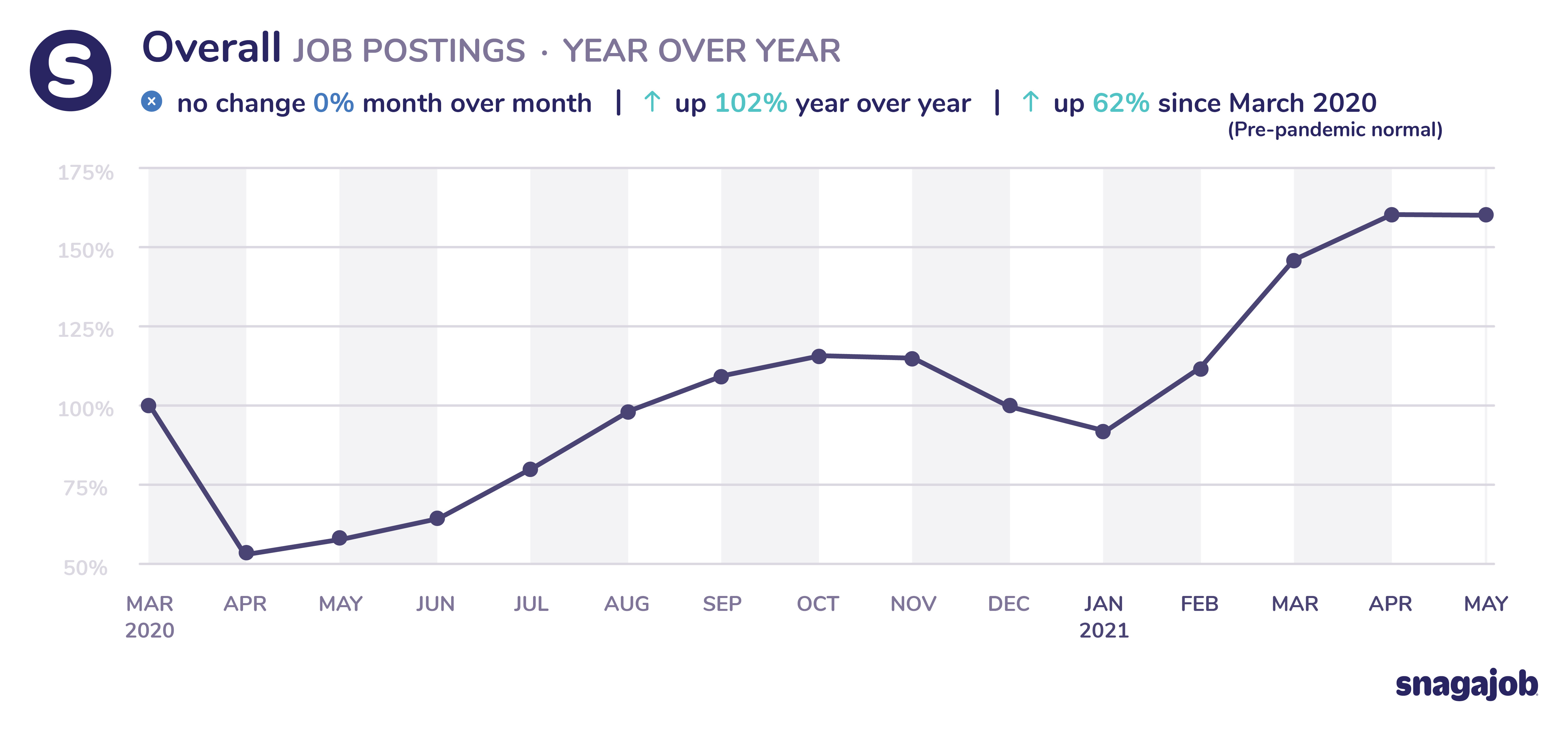
Overall jobs are up 62% compared to pre-pandemic norms, flat month over month and up 102% year over year.
The Labor Department is set to release its employment report on Friday which will provide further clarity around the questionable April hiring slowdown. It will also provide clarity as to whether or not workers are jumping back into the labor force as predicted which would answer many economists’ notions about inflation.Memorial Day weekend unofficially kicked off Summer and brought with it the anticipated boost in consumer travel. The Transportation Security Administration (TSA) reported that 7.1 million people were screened at U.S. airport checkpoints from Thursday through Sunday with Friday being the highest single travel day since March 2020.
Consumer confidence has also increased, with 52% saying they are more comfortable making major household purchases (homes, cars, etc) and 57% are more comfortable with discretionary purchases than they were six months ago.
Jobless claims are at a new pandemic low, continuing their downward trend and showing that the labor market is gaining strength as COVID-19 cases steadily decrease and over 50% of Americans have received at least one dose of the vaccine. With 22 states ending additional unemployment benefits this month, we expect to see even more people returning to work. Job searches in states that have made this announcement have already increased.
Across the U.S., recovery is playing out unevenly. Some states are experiencing a people shortage, with five job openings for every unemployed worker. In others, jobless rates remain historically high, indicating a shortage of people wanting to work. The Plains states had among the lowest government-imposed restrictions on businesses and were some of the quickest to reopen, thereby avoiding deeper job loss. However, regions hit hardest by the pandemic with longer-lasting restrictions, like New York and California, are still seeing record unemployment.
In last week’s Hourly Job Market Update, Snagajob CEO Mathieu Stevenson gave employers the following advice for remaining competitive in this tight market:
Encourage and welcome first-time job seekers—applications from this group are up 35% from pre-pandemic norms
Evaluate job perks above and beyond a competitive wage (job pathing, training, benefits)
Consider on-demand staffing platforms to fill staffing gaps and unfilled shifts with new talent pools
Optimize job descriptions by listing pay, highlighting differentiators and including health and safety measures
Jobs
All industry data is from 3/2/20-5/31/21
Here are the latest job numbers by industry:
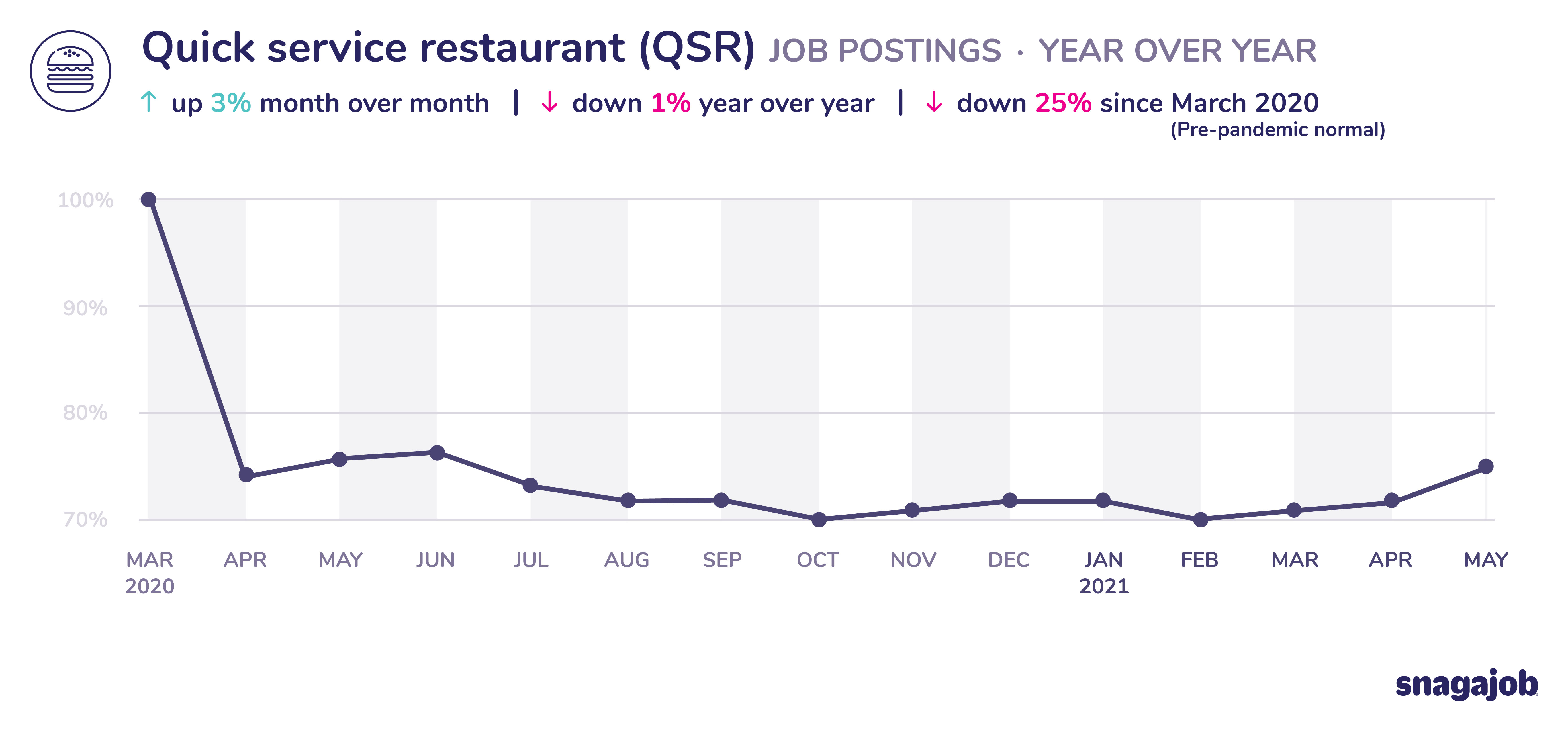
Quick service restaurant (QSR) jobs are down 25% compared to pre-pandemic norms, seeing 3% month over month growth and a 1% year over year decline.
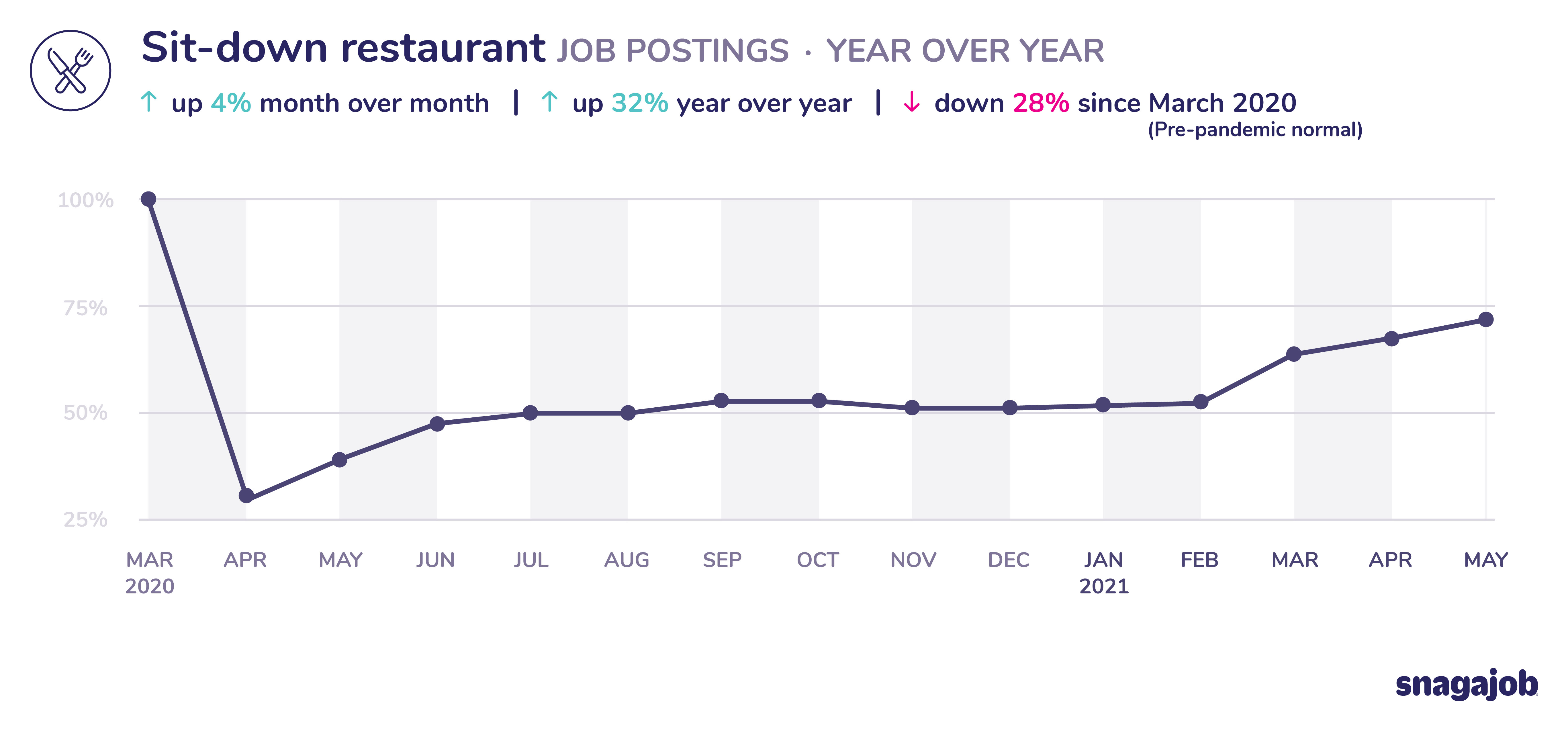
Sit-down restaurant jobs are down 28% compared to pre-pandemic norms, seeing 4% month over month growth and 32% year over year growth.
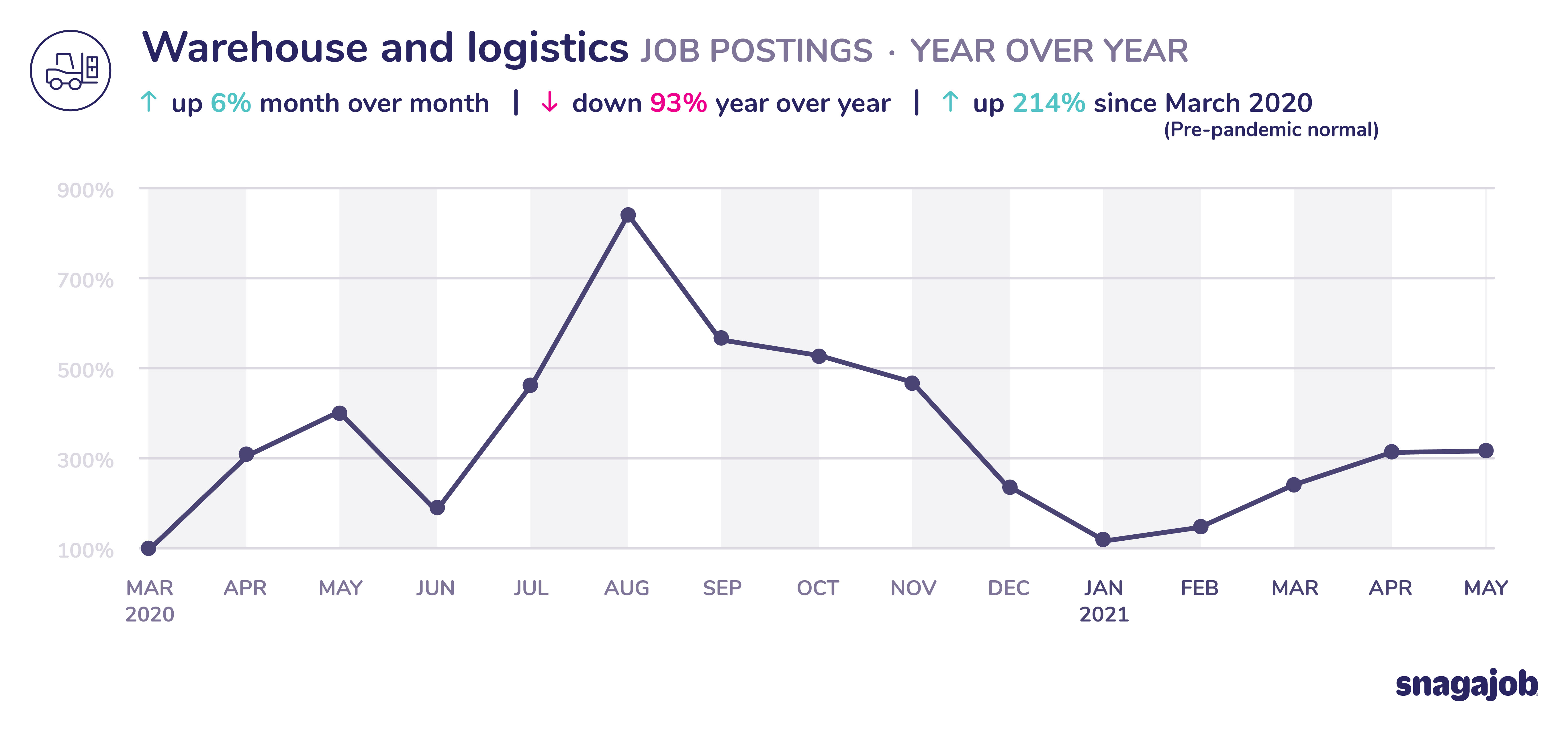
Warehouse and logistics jobs are up 214% compared to pre-pandemic norms, seeing 6% month over month growth and a 93% year over year decline.
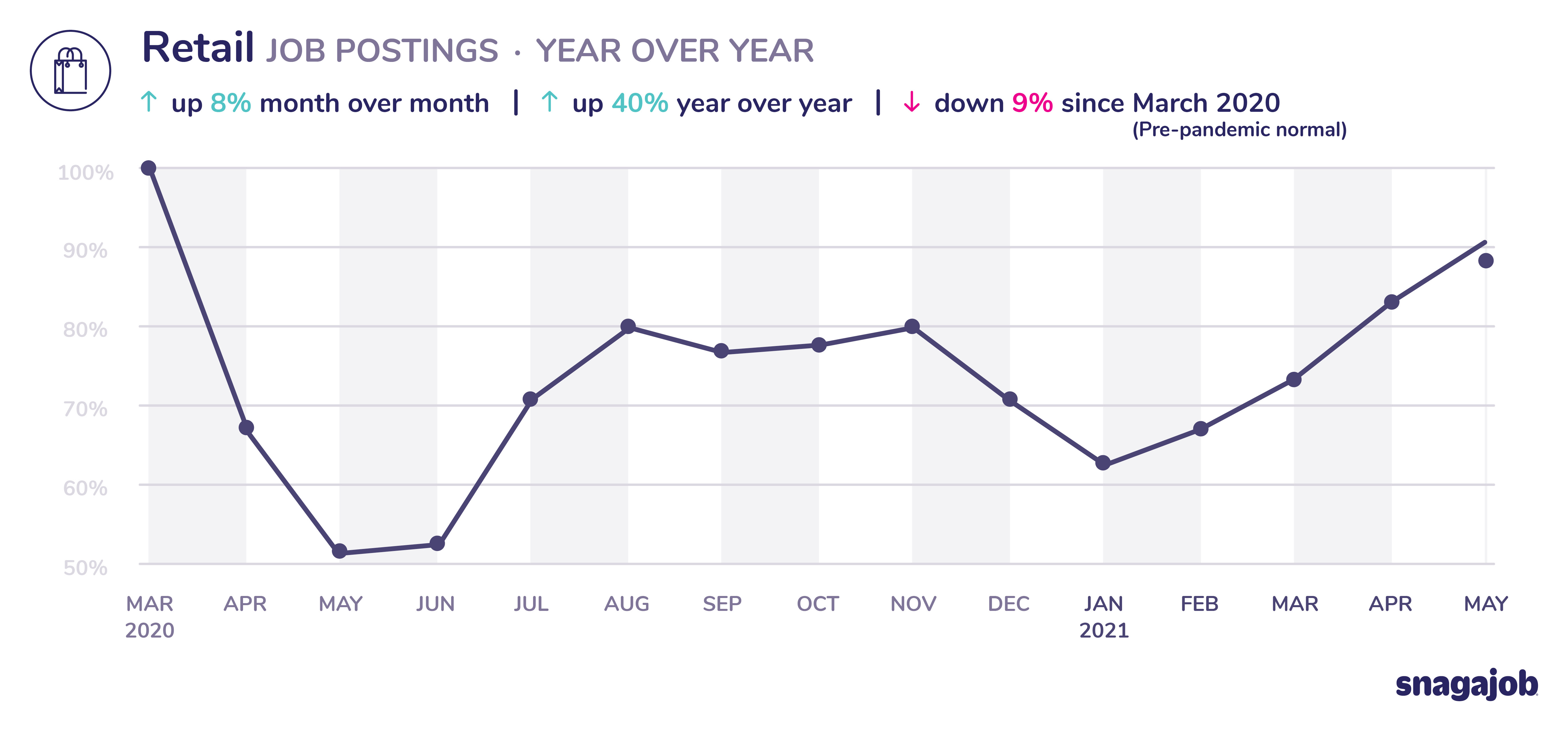
Retail jobs are down 9% compared to pre-pandemic norms, seeing 8% month over month growth and 40% year over year growth.
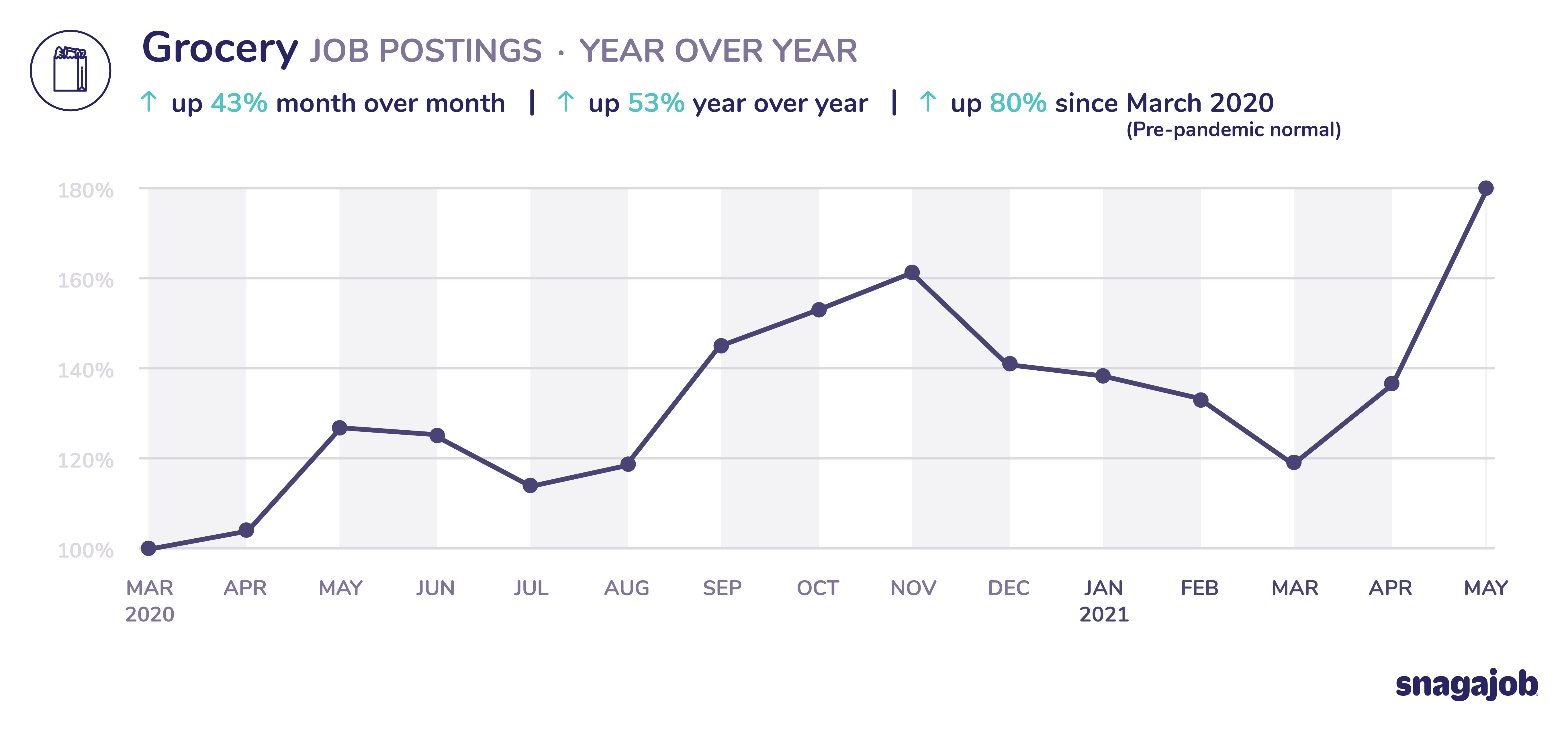
Grocery jobs are up 80% compared to pre-pandemic norms, seeing 43% month over month growth and 53% year over year growth.
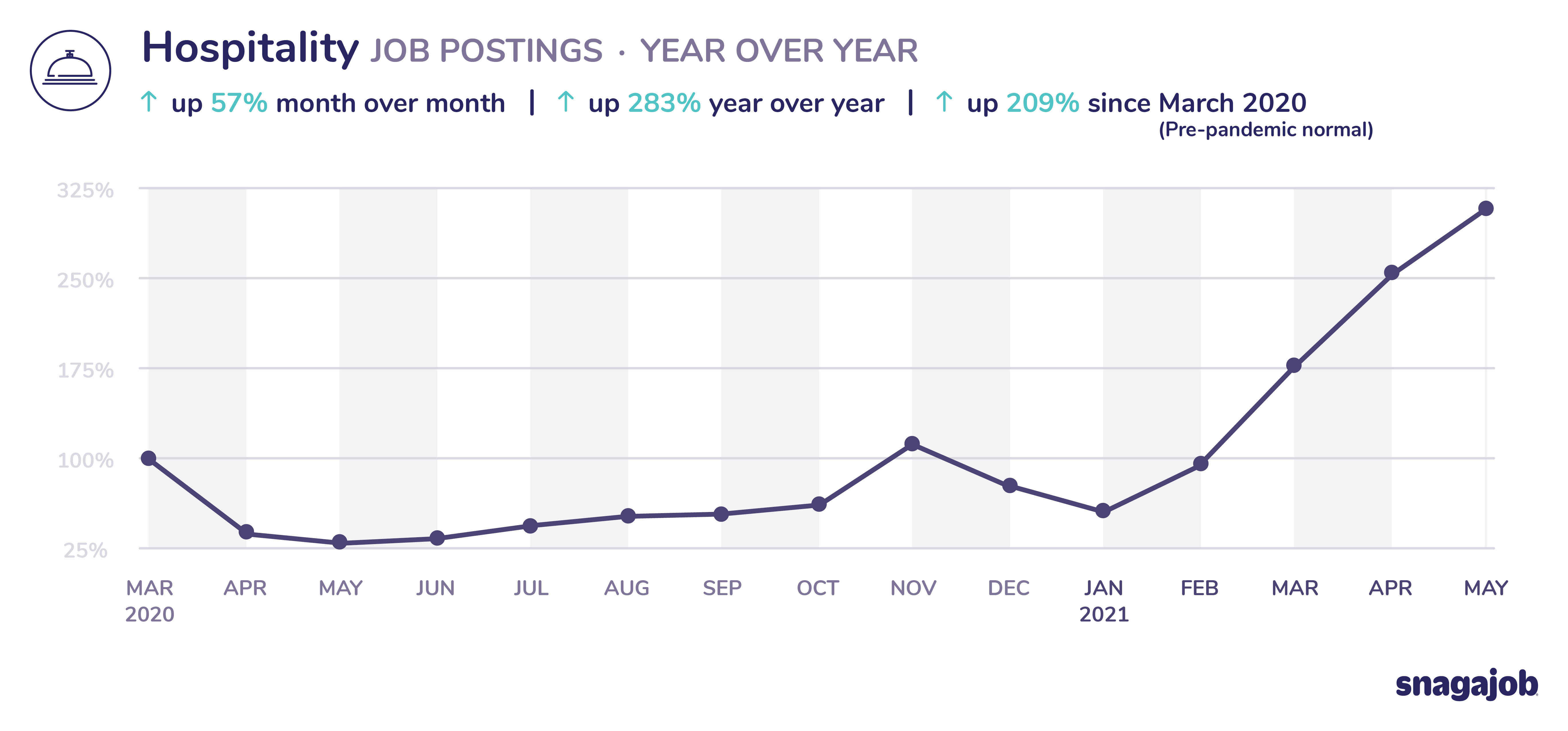
Hospitality jobs are up 209% compared to pre-pandemic norms, seeing 57% month over month growth and 283% year over year growth.
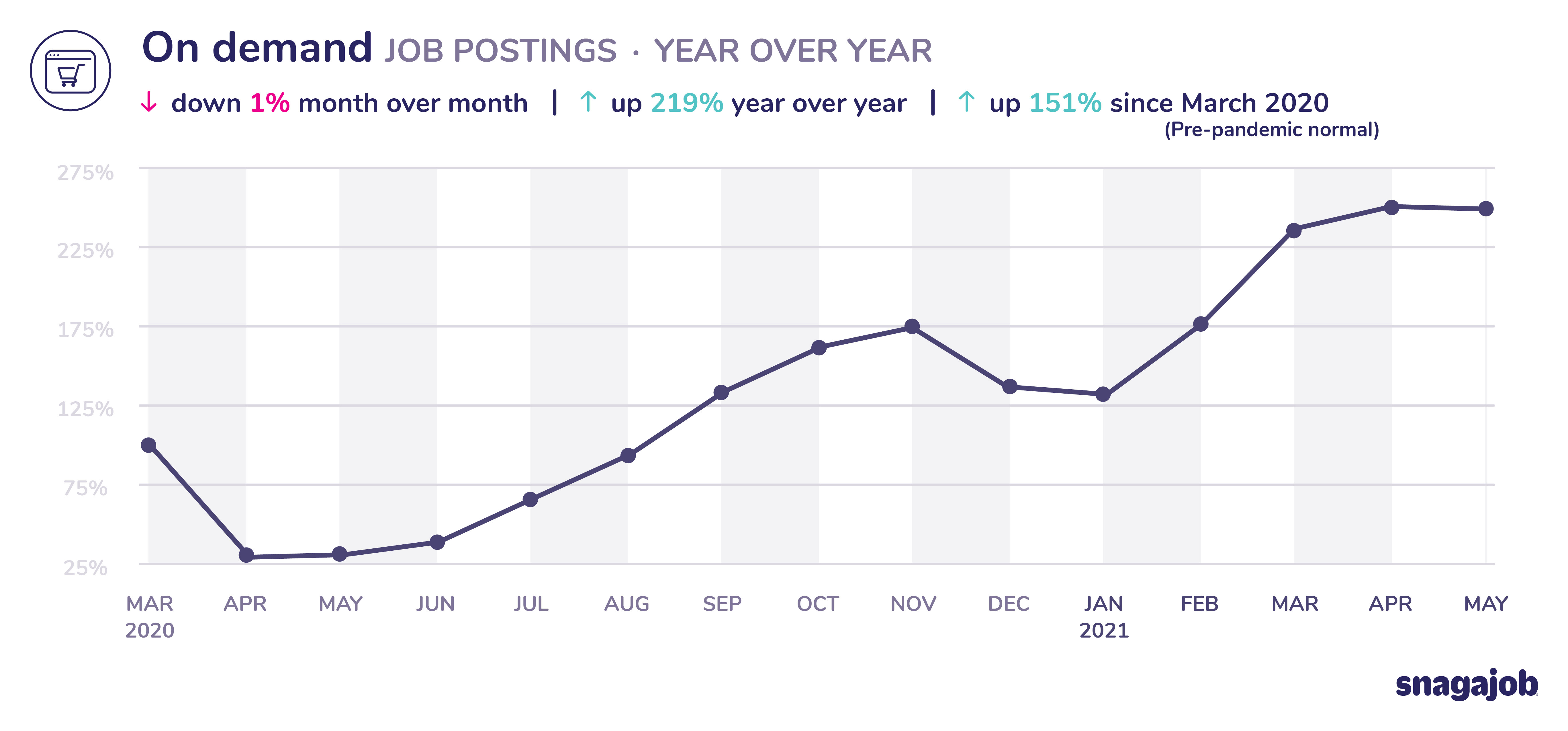
On demand jobs are up 151% compared to pre-pandemic norms, seeing a 1% month over month decline and 219% year over year growth.
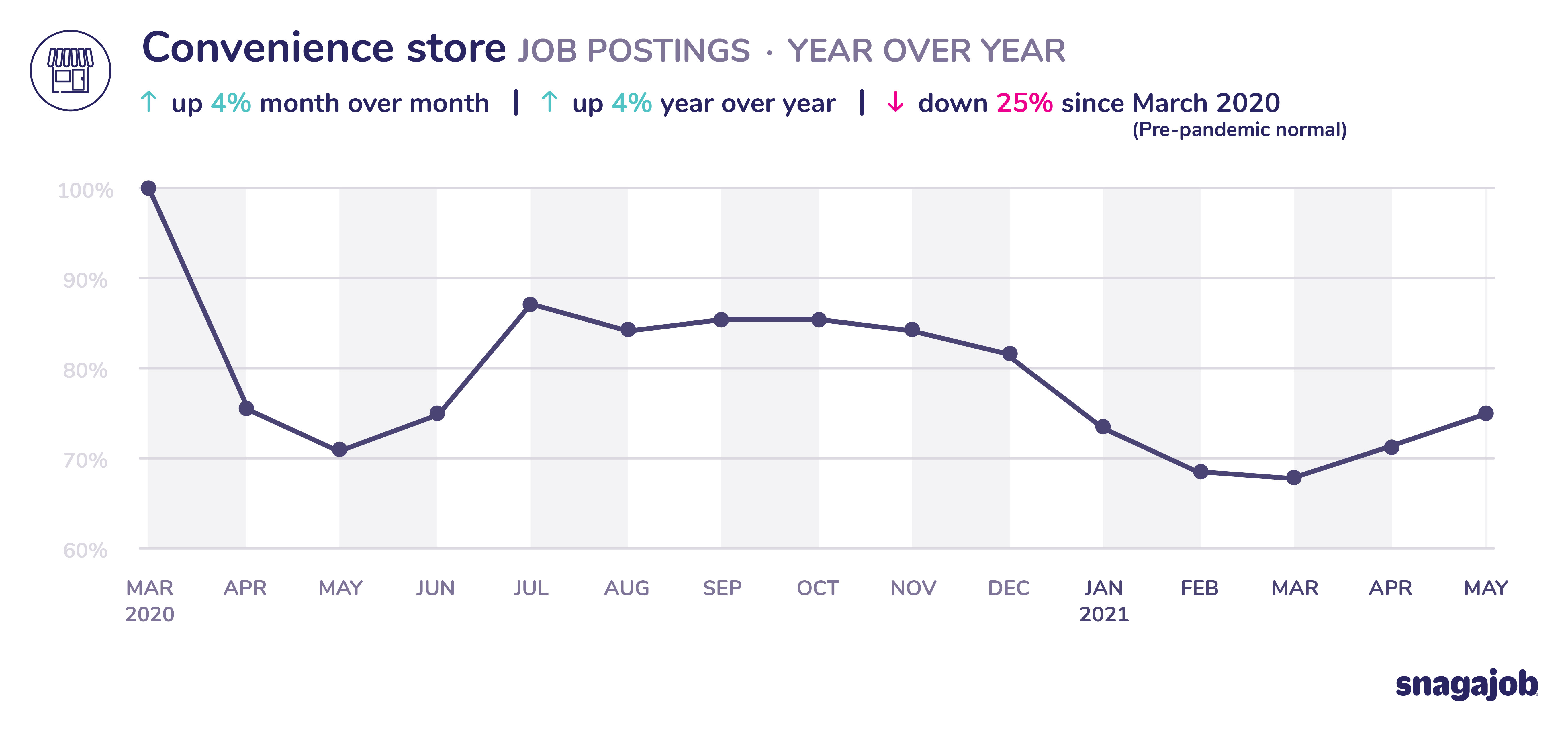
Convenience store jobs are down 25% compared to pre-pandemic norms, seeing 4% month over month growth and 4% year over year growth.
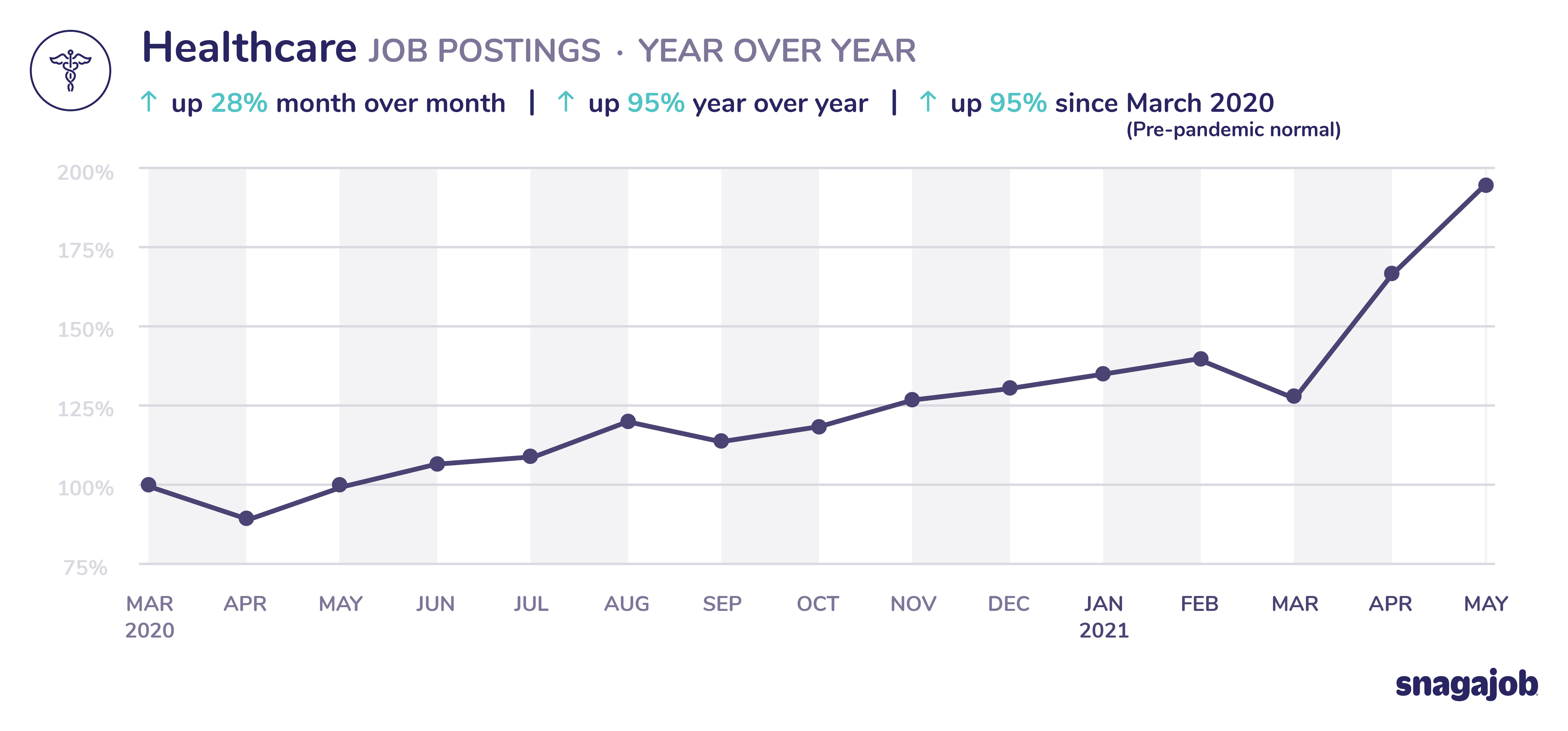
Healthcare jobs are up 95% compared to pre-pandemic norms, seeing 28% month over month growth and 95% year over year growth.
Workers
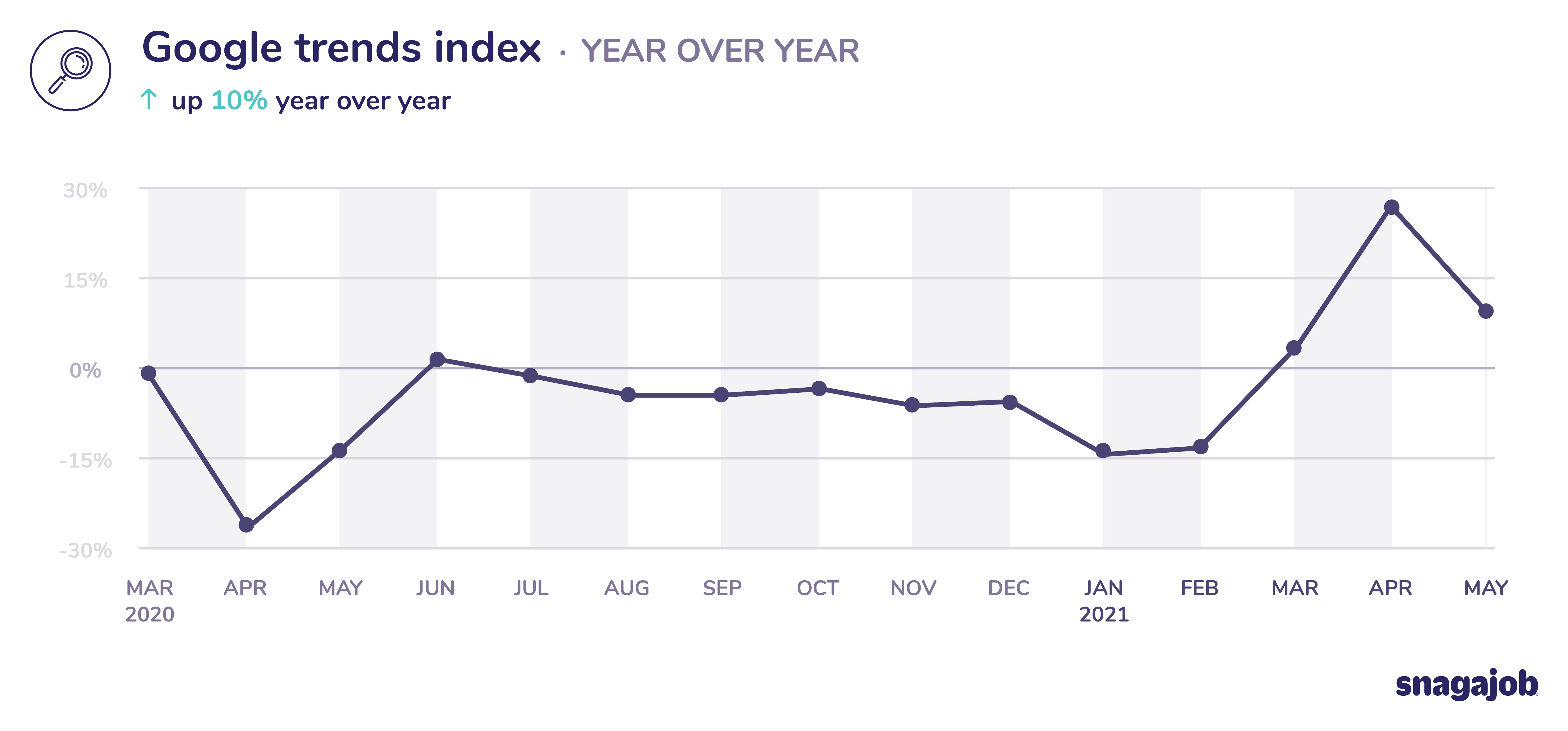
Google searches for hourly jobs are up 10% year over year.
The bottom line
We’ll continue to be your best resource for hourly job market insights as we collectively navigate towards our new normal and beyond.
 Your Privacy Choices